

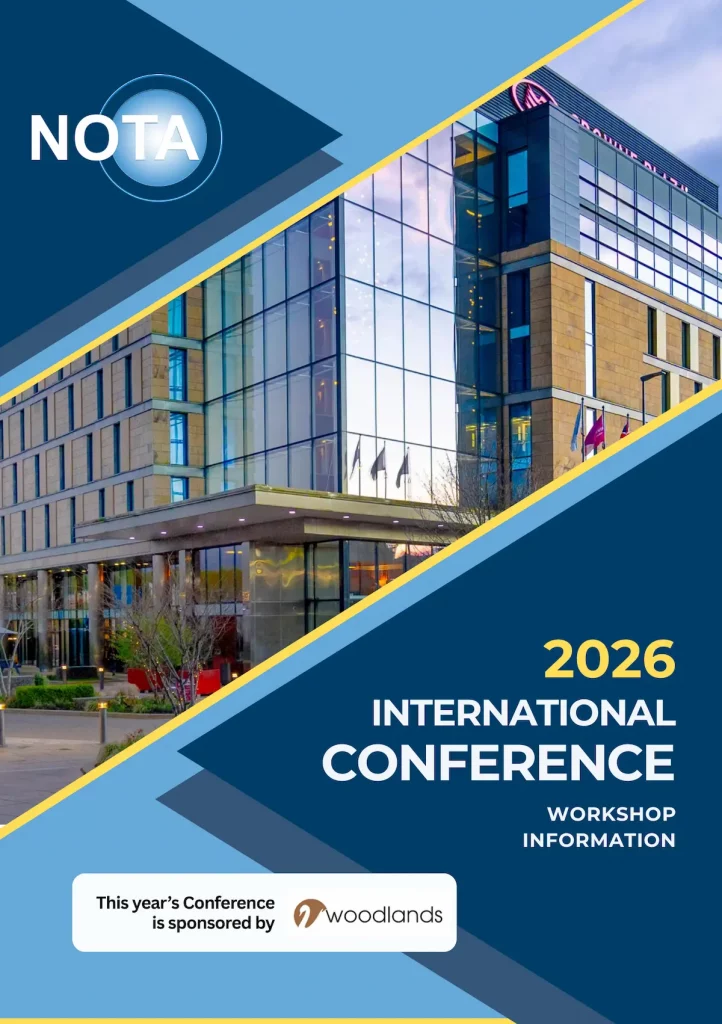
NOTA International
Conference 2026

13th & 14th May 2026 – Crowne Plaza Newcastle
Welcome to the 2026
NOTA International Conference!
NOTA are delighted to invite you to our 36th International Conference, which will be held in Newcastle at the Crowne Plaza hotel in the city centre on 13th and 14th May 2026.
The NOTA annual conference is a unique event, offering a range of keynotes, workshops, research presentations and interactive poster sessions all of which share the latest in research, practice and policy on the prevention of sexual violence. The NOTA international conference offers unprecedented learning & networking opportunities, attracting speakers and delegates from around the world, consistently drawing praise for the quality of the presentations, the warm and positive atmosphere of the event, and above all the quality and usefulness of the learning that delegates take away and back into their work.
More information about the 2026 conference will be available soon, so please check back on the website in coming weeks.
KEYNOTE SPEAKERS for 2026
Keynote ONE:
Professor Jennie Noll
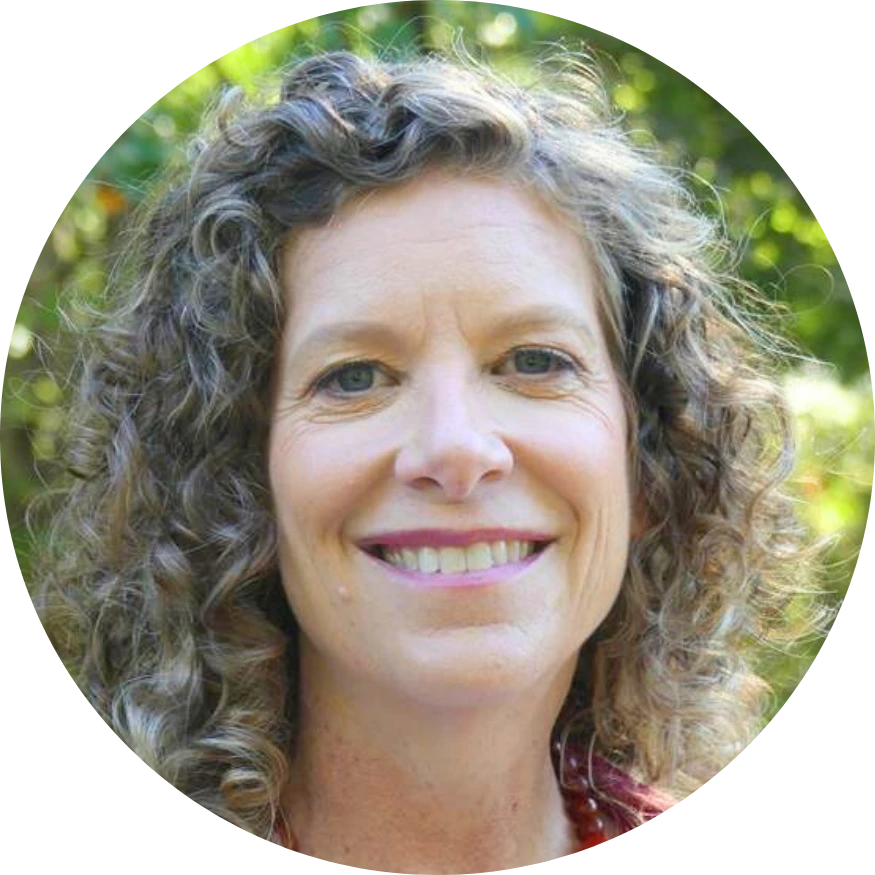
What’s it going to take to align research, policy, and public investment to impact rates of child sexual abuse at the population level? Tales from a success story.
Worldwide 18% of females and 14% of males experience sexual violence against children (SVAC) and prevalence rates have stagnated since the 1990s. Even as SVAC incurs astounding public costs and grave health consequences, few overarching policies exist that allocate resources toward viable solutions. Missing from extant discourse is adequate evidence from which to implore large public investment in SVAC primary prevention. Especially damning, have been national taskforce reports calling out prevention efforts as “insufficient” to impact prevalence rates. One exception is a recent controlled trial of a multisector approach in the US state of Pennsylvania (PA) where population-level SVAC rates significantly declined. The design, implementation, and evaluation of this research will be discussed, as will an empirical model of research-to-policy collaboration that spurred major, subsequent policy change. In these uncertain times of collapsing infrastructures and dwindling assets, such efforts provide hope and empowerment as we coalesce around policy and practice reform to benefit survivors and keep children safe through sustained public mobilization.
Keynote TWO:
Dr Elly Hanson

Understanding organised ritual abuse
There is a striking contrast between the testimonies of many ritual abuse survivors speaking out to therapists and researchers, and the near silence societally on this most extreme form of child (and adult) abuse. In this talk, Dr Hanson shares the key insights of her recently published report ‘Organised ritual abuse and its wider context: degradation, deception and disavowal’ (published by the National Police Chiefs’ Council and NAPAC). She unpacks the dynamics, perpetrator psychology and impact of this abuse, and explores the culture of disbelief that has largely hidden it from view. Finally she considers the implications of this understanding for us as a society generally, as well as for those working with offender populations more specifically.
Keynote THREE:
Olivia Henry & Nicky Herron
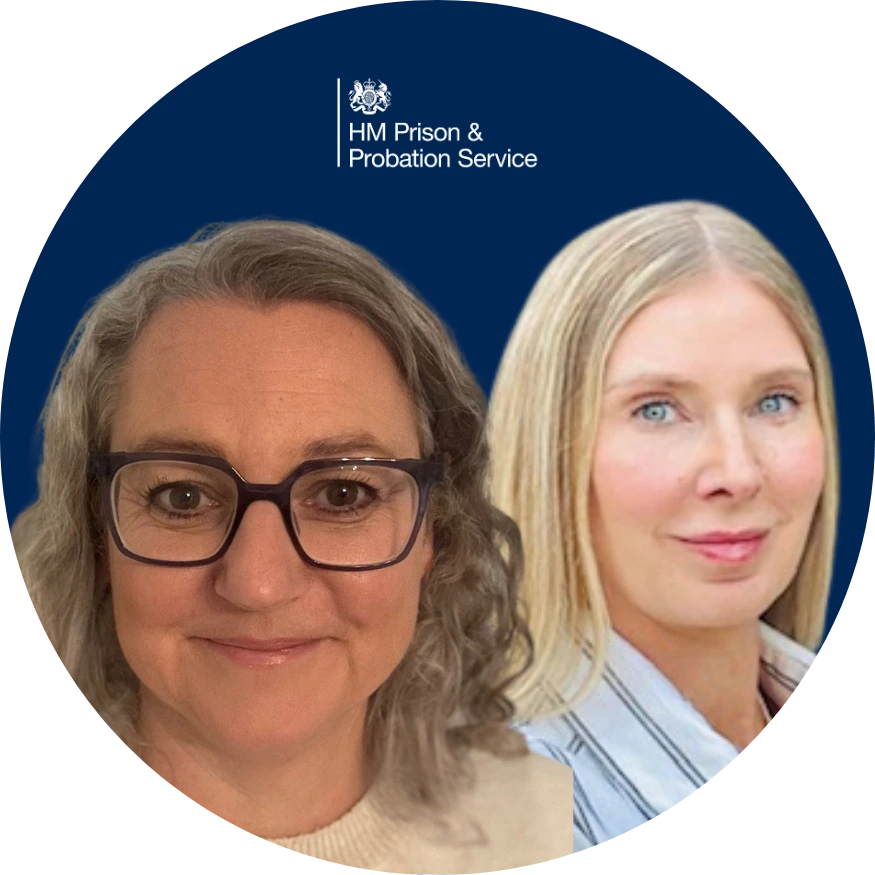
Providing Accredited Programmes at Scale: The System-Aware Biopsychosocial Model of Change and Building Choices
For over three decades, Accredited Programmes (AcPs) have shaped rehabilitation in His Majesty’s Prison and Probation Service (HMPPS). Yet evaluations show modest impact on general offending and limited evidence for offence-specific programmes, particularly sexual offending. The Core SOTP evaluation (Mews et al., 2017) found no measurable reduction in sexual reoffending; a pivotal moment prompting scrutiny and reform. This keynote introduces the System-Aware Biopsychosocial Model of Change: a conceptual framework bridging the gap between evidence-based design and scalable delivery. It reframes rehabilitation as a systemic capability rather than isolated programmes, integrating three interdependent layers – biopsychosocial design principles, fidelity infrastructure, and system support – linked by feedback loops for continuous learning and adaptation. By combining insights from rehabilitative theory and implementation science, the model offers a scalable pathway for aligning design, delivery, and organisational conditions.
Its practical application is illustrated through Building Choices, HMPPS’s flagship AcP, which consolidates offence-specific interventions into one person-centred, trauma-informed, needs-led framework addressing the criminogenic needs of people convicted of sexual offences. Supported by the Healthy Sex Programme – our specialist AcP for individuals in prison with atypical offence-related sexual interests – this streamlined framework enables concentrated focus on fidelity, system support, and robust feedback loops, including one of the most ambitious evaluation strategies in HMPPS to date. We argue that Building Choices, underpinned by a System-Aware Biopsychosocial Model of Change, works with scale and complexity rather than against it, offering the best prospect of realising our core purpose: to change lives, reduce harm, and create safer communities.
Keynote FOUR:
Enver Solomon

Reflections from a charity CEO: Challenges and Opportunities
Enver joined Nacro the national social inclusion charity as Chief Executive in March following five years as CEO of the Refugee Council charity that is the largest provider of services to refugees in England. Prior to that he was CEO of Just for Kids Law, a charity providing youth support and legal representation to children and young people facing adversity.
Prior to working in the voluntary sector, he was a BBC journalist for ten years. Enver has been on advisory boards for the Department of Education, HM Inspector of Prisons and the Office of the Children’s Commissioner, as well as chairing a number of cross-sector coalitions, including the End Child Poverty Campaign and the Standing Committee for Youth Justice. In his spare time, he enjoys cycling, camping, and generally getting out into the British countryside.
In 2023 he was named Charity Leader of the Year in the Charity Times annual awards. He was given an OBE for services to refugee resettlement in the 2026 New Year Honours.
Day One
Special Guest Speaker
Dame Vera Baird
Dame Vera Baird DBE KC is a barrister and politician who has held roles as a government minister, police and crime commissioner, and Victims’ Commissioner for England and Wales.
A Labour Party Member of Parliament for Redcar from 2001 to 2010, Dame Baird was a government minister from 2006 to 2010 and the Solicitor General for England and Wales from 2007 to 2010. She served as the Police and Crime Commissioner for Northumbria Police from November 2012 to June 2019. She was appointed as Victims’ Commissioner in June 2019 and resigned in September 2022, accusing government ministers of downgrading victims’ interests.
Vera was appointed Dame Commander of the Order of the British Empire (DBE) in the 2017 New Year Honours for services to women and equality.
Day Two
Special Guest Speaker
Kate Fraser
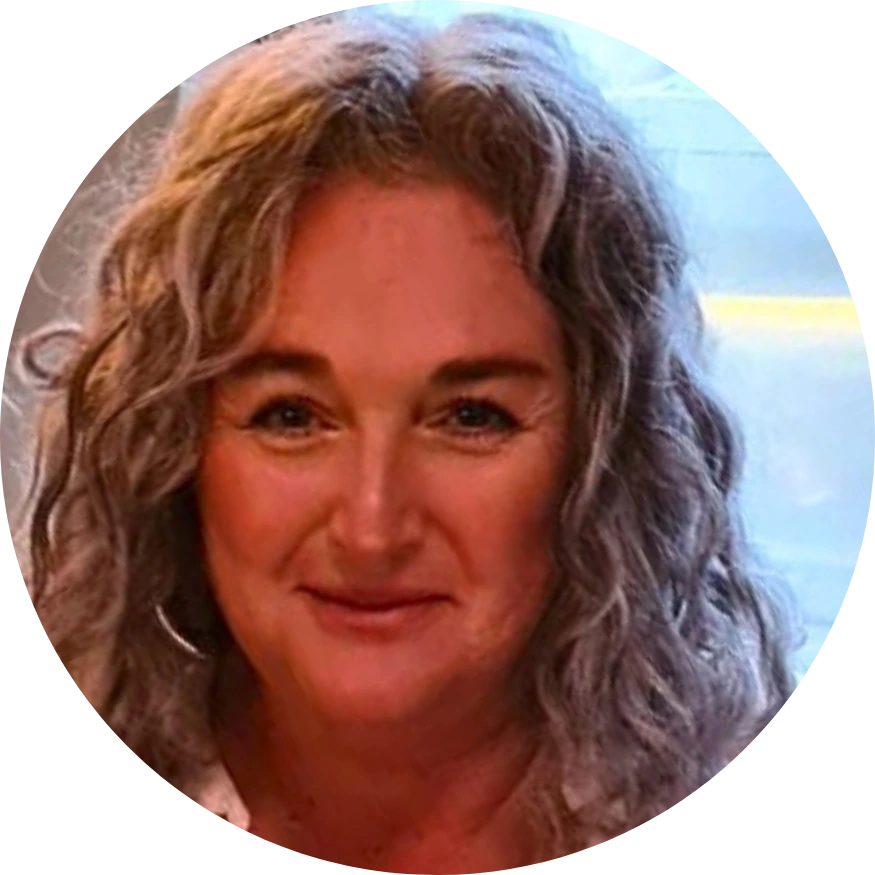
Kate has worked with Women in Prison since 2009 in various roles including frontline programmes and was integral to setting up the WomenMATTA centre in Manchester. Since then she has undertaken work across a number of different initiatives both in community and custody. Her role now centres on co-production which is where her passion lies, ensuring that women’s voices are heard both within Women in Prison’s national magazine, Still I Rise, and more widely at strategic and operational levels.
View Our 2026
Workshop Lineup!
View our lineup of 36 hand-picked workshops spread across 4 breakout sessions at the 2026 International Conference!
Once you have chosen your desired workshops, go to our official 2026 International Conference App to book your place!
2026 Conference Social Events
Wine Reception &
Poster Session

Join us on Wednesday 13th (Day One of the Conference) at 16:45 for a glass of wine, whilst our 2026 poster sessions present us with further learning opportunities!
Social Evening at
The Head of Steam
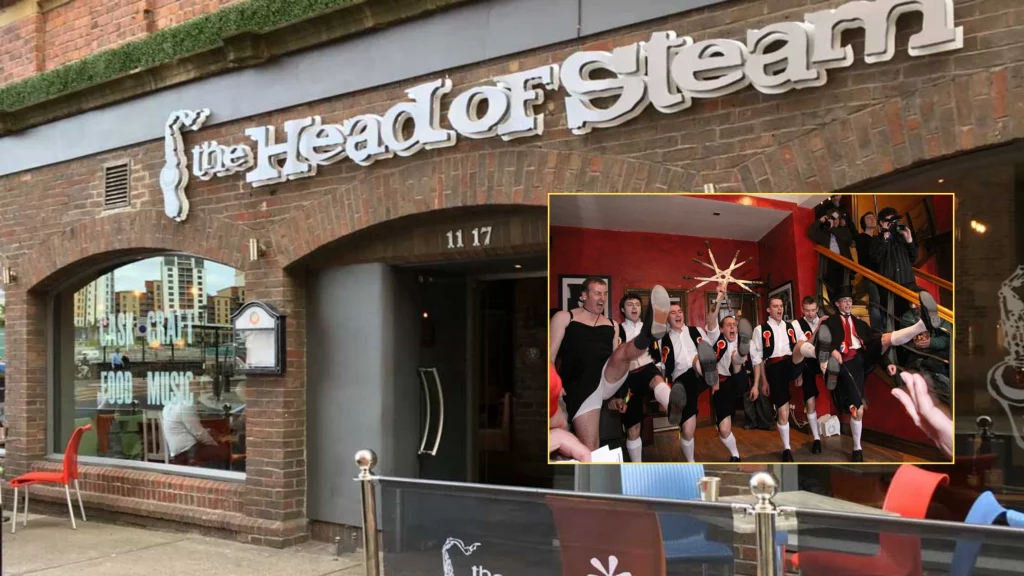
Following the close of Day One, we invite delegates to join us at the iconic Head of Steam for a complimentary buffet and entertainment from the Newcastle Kingsmen Champion Sword and Clog Dancers!
NOTA INTERNATIONAL 2026 TIMETABLE
2026 International Conference Day One
| 08:00 – 09:00 | Arrival, Tea/Coffee and Registration |
| 09:00 – 09:15 | Conference Open by NOTA Chair |
| 09:15 – 10:00 | Guest Speaker: Dame Vera Baird |
| 10:00 – 11:00 | Keynote 1: Professor Jennie Noll |
| 11:00 – 11:15 | Refreshment Break |
| 11:15 – 12:45 | Workshop Sessions A |
| 12:45 – 13:45 | Lunch and networking |
| 13:45 – 15:15 | Workshop Sessions B |
| 15:15 – 15:30 | Refreshment Break |
| 15:30 – 16:30 | Keynote 2: Dr Elly Hanson |
| 16:30 – 16:45 | Closing comments from NOTA |
| 16:45 – 18:00 | Posters & Wine Reception |
| 19:00 Onwards | NOTA Social Evening (Head of Steam, Quayside) |
2026 International Conference Day Two
| 08:30 – 09:00 | Arrival, Tea/Coffee and Registration |
| 09:00 – 09:05 | Welcome from NOTA |
| 09:05 – 09:45 | Guest Speaker: Kate Fraser |
| 09:45 – 10:45 | Keynote 3: Olivia Henry & Nicky Herron |
| 10:45 – 11:00 | Refreshment Break |
| 11:00 – 12:30 | Workshop Sessions C |
| 12:30 – 13:30 | Lunch and networking |
| 13:30 – 15:00 | Workshop Sessions D |
| 15:00 – 15:15 | Refreshment Break |
| 15:15 – 16:15 | Keynote 4: Enver Solomon |
| 16:15 – 16:30 | NOTA Chair Summary of Conference & Close |
Workshop Sessions Schedule
Workshop Sessions A
| A1 | Child Adolescent Sexual Exploitation Evaluation (CASEE) Professor Carol A Ireland |
| A2 | Harmful Sexual Behaviour and Autism: Working with Children and Young People Stuart Allardyce, David Russell, Sophie King-Hill, Clare Allely |
| A3 | Amplifying Voices of Victim‑Survivors of HSB Simon Hackett, Deb Aldrick, Gemma McKibbin |
| A4 | Practical Approaches to child sexual abuse prevention across the EU Kieran McCartan, Alice Foster-Metcalf |
| A5 | CIRCL in Practice: Cultural sensitivity in HSB work Lovedeep Rai, Karen Martin |
| A6 | Sexual harm prevention, through the lens of people with a sexual interest in children and non-offending partners Joanna Dodsworth, Jessica Palmer, Elliw Glyn, Alexandra Burgess |
| A7 | When Safety and Connection Collide: Risk, Relationship, and Voice in Women’s Secure Settings Kate Fraser |
| A8 | Using EMDR to reduce sexual interest in children Lisa Wright, Mark Walton |
| A9 | Research Group One: Neurodiversity and assessing harmful sexual behaviour Ikrah Ahmed, Rachel Edwards, Sally Baker, Amanda Paton, Lesley Anne Ey |
Workshop Sessions B
| B1 | Lethality in Sexual Violence: Trajectories, Assessment, and Intervention Rajan Darjee, Tamsin Higgs |
| B2 | Reconceptualising repeat sex offending Kari Davies, Miranda Horvath, Ruth Spence |
| B3 | Beyond the Manosphere: Violence, vulnerability and reframing masculinity for boys and young men in a digital age Sophie King-Hill, Josephine Broyd |
| B4 | Improving Educational Responses to HSB (Norway, Australia, UK) Kjersti Draugedalen, Lesley Anne Ey, Simon Hackett |
| B5 | The appliance of science to tackle the policy-sticky issues of child sexual abuse prevention Jennie Noll, Pat Branigan |
| B6 | From Understanding to Action: Developing and Applying the Layered Continuum and Response Mapping Tools for HSB Practice Amanda Paton |
| B7 | Keep Safe – A Prevention, Early Intervention and Treatment Programme for young people with learning disabilities who have harmed sexually and their parents/carers Stephen Barry, Dominic Smith |
| B8 | Translating Therapy into Practice: Examples from Interventions Addressing Harmful Sexual Behaviour in Young People and their Families Jodie Harrison, Jake Ellison, Hannah Cowling |
| B9 | Research Group 2: Lived experience and trauma informed practice Genevieve Bloxsom, Abbie Lake, Dr Lea Kamitz, Faye O’Connor, Susan Whibley |
Workshop Sessions C
| C1 | Risk for Sexual Violence Protocol – Version 2 (RSVP‑V2) Rajan Darjee |
| C2 | Clinical and therapeutic responses to harmful sexual behaviours: current developments from Australia Amanda Paton, Simon Hackett, Eli Miller |
| C3 | Strengthening Policing & Partnerships for group‑based CSE Tracey Watkinson, Peter Hornby |
| C4 | Patterns of behaviour or missed opportunities? Developmental lens Sharron Wareham |
| C5 | Young People’s Harmful Sexual Behaviour, A New Way of Conceptualising This, and Supporting Them Collette Kalsi, Emily Ellison, Ruth Austin |
| C6 | Using Superheroes to Address Trauma, Loss & Resilience (Batman Group) Kevin Creeden |
| C7 | Application of RNR principles with adolescents Jacqueline Page |
| C8 | Too Close to See? Denial in families re: CSA Holly Burgin, Emma King |
| C9 | Research Group 3: Adult sexual offending Emma Tuschick, Leona Mydlowski, Sarah Kingston, David Glasgow |
Workshop Sessions D
| D1 | Advancing Innovative Pharmacological, Psychosocial, and Programme‑Based Interventions for Adult Sexual Offending within HMPPS Leanne Hanley, Rebekah Bourne, Olivia Henry, Julie Willis |
| D2 | Rights‑based practice with children/YP displaying HSB Simon Hackett, Lynne Cairns, Janelle Rabe, Kjersti Draugedalen |
| D3 | Rethinking safety planning with children who have displayed harmful sexual behaviours Linda Valenta, Amanda Paton |
| D4 | Improving our response: To better protect and respond to online child sexual abuse Emma Hodgson, Lorraine Myles |
| D5 | The Young People’s Sexual Behaviour Mapping Tool: A Participatory Framework for Understanding and Responding to Adolescent Sexual Behaviours Sophie King-Hill |
| D6 | Minding Minds that Mind Minds Patrick Ryan |
| D7 | Not just the young: Technology‑facilitated sexual abuse by older adults Raj Darjee, Jenny Greensmith |
| D8 | Child Sexual Abuse case study – Allegation to conviction Naomi Jones, Joanne Newton, Kirstie Devine |
| D9 | Research Group 4: Responses and Prevention Sylwia Kieran, Jo Curtis, Charlotte Kite, Jennie Charlton, Amy Grubb, Erifili Efthymiadou, Paige Moran, Vicky Young |